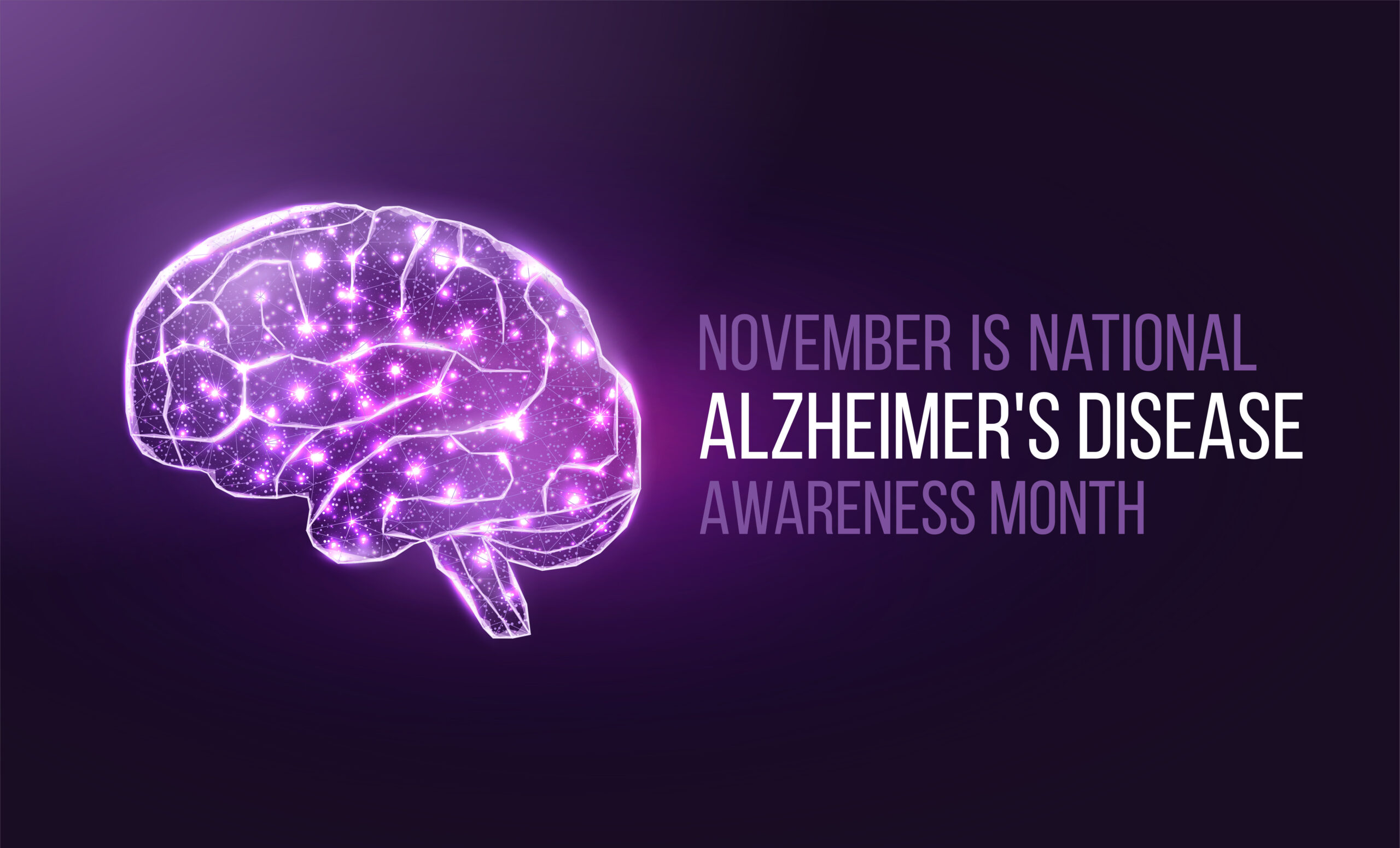
November is National Alzheimer’s Disease Awareness Month. Alzheimer’s is a progressive brain disorder that cannot be reversed. This disease declines the person’s ability to think, remember, and carry out familiar tasks.
Neurons and connection pathways
The progressive decline in patients with Alzheimer’s is due to the loss of communication between neurons. The neurons are responsible for sending messages from the brain to all parts of your body.
Frontal lobe
The frontal lobe is responsible for your social and emotional skills, motor functions, language, and cognitive functions. When the frontal lobe is damaged, you may experience:
A loss of motivation
Lack of emotion
The constant feeling of being tired
Inability to control your movements.
Parietal Lobe
The parietal lobe is located at the back of the skull. It is responsible for your senses such as touch, taste, sight, smell, and temperature. Damage to the parietal lobe can affect any of these functions.
Temporal Lobe
The temporal lobe’s primary function is to keep your memories. Damage to this lobe will make it hard to retain new information.
Who does Alzheimer’s affect?
Commonly, individuals that develop Alzheimer’s are usually over the age of 65, but people under this age may develop it as well, which is considered early-onset.
Early signs of Alzheimer’s disease
The early signs of Alzheimer’s may begin with memory problems and difficulty learning new things or information due to damage in the brain’s hippocampus.
Loss of memory that disrupts daily life.
Inability to communicate properly. As Alzheimer’s progresses, you may experience communication problems such as struggling to follow a conversation and continuously repeating yourself.
Confusion. Confusion can become part of your daily life as you may lose track of time or the day.
Struggling to complete daily tasks. Being able to concentrate or complete tasks may become a problem as Alzheimer’s progresses.
Increase in moods and changes in personality. In the early stages of Alzheimer’s, you may experience mood changes from being annoyed or anxious. You may also lose interest in talking to your family and friends and may not want to participate in activities or hobbies that you did before.
Other forms of neurological diseases
Other degenerative brain diseases include:
Vascular Dementia
Vascular dementia is caused when you have had multiple strokes, which can cause brain damage which leads to the loss of memory in older adults.
Parkinson’s Disease Dementia
Parkinson’s is a disorder that affects the central nervous system, which affects your movement and will often include tremors in certain parts of your body.
Frontotemporal Dementia
Frontotemporal dementia affects both the frontal and temporal lobes. As this type of dementia progresses, the nerve cells in these lobes are lost causing them to shrink, ultimately affecting behavior, movement, and ability to communicate.
Huntington’s Disease
A rare genetic disease that causes damage to nerve cells in the brain and eventually breaks them down progressively.
Stages of Alzheimer’s disease
Early-stage Alzheimer’s
During the early stage, you may still function independently and continue your normal activities of daily living, such as driving, working, and participating in social events. However, you may experience lapses in your memory, such as forgetting words that are familiar to you.
Middle-stage Alzheimer’s
The middle stage of Alzheimer’s is also known as the longest stage as it can last for years. During this stage, you may experience more pronounced Alzheimer’s symptoms, including confusing words in a conversation, refusing to do self-care such as bathing, and mood changes.
Late-stage Alzheimer’s
In the late stage of Alzheimer’s disease, the symptoms become more severe as you lose the ability to hold a conversation or control your movements. Worsening memory and significant changes to your personality also occur.
Hospice care for Alzheimer’s disease
What to expect
As Alzheimer’s symptoms progress and get worse, hospice care includes symptom management and providing emotional and spiritual support to you and your family.
Manage Consent
To provide the best experiences, we and our partners use technologies like cookies to store and/or access device information. Consenting to these technologies will allow us and our partners to process personal data such as browsing behavior or unique IDs on this site and show (non-) personalized ads. Not consenting or withdrawing consent, may adversely affect certain features and functions.
Click below to consent to the above or make granular choices. Your choices will be applied to this site only. You can change your settings at any time, including withdrawing your consent, by using the toggles on the Cookie Policy, or by clicking on the manage consent button at the bottom of the screen.
Functional
Always active
The technical storage or access is strictly necessary for the legitimate purpose of enabling the use of a specific service explicitly requested by the subscriber or user, or for the sole purpose of carrying out the transmission of a communication over an electronic communications network.
Preferences
The technical storage or access is necessary for the legitimate purpose of storing preferences that are not requested by the subscriber or user.
Statistics
The technical storage or access that is used exclusively for statistical purposes.The technical storage or access that is used exclusively for anonymous statistical purposes. Without a subpoena, voluntary compliance on the part of your Internet Service Provider, or additional records from a third party, information stored or retrieved for this purpose alone cannot usually be used to identify you.
Marketing
The technical storage or access is required to create user profiles to send advertising, or to track the user on a website or across several websites for similar marketing purposes.